
The psychologist who thought he could withstand trauma
By Dennis Mazalin
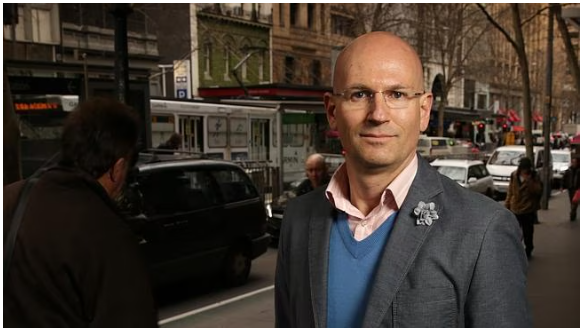
It was meant to be a romantic day shopping for anniversary gifts in Melbourne. The sky was blue and there was a pleasant early winter crispness as my wife and I strolled blissfully arm-in-arm, oblivious to how things were to dramatically change.
On Collins Street we were suddenly caught among a congested crowd. A film crew in the middle of the road had replaced the usual traffic — were they shooting a film? My wife began to look for Johnny Depp.
Squashed in among onlookers, I naively asked a man what was going on. He calmly replied that someone was threatening to kill themselves. I half jokingly said I was a shrink, then I realised he was serious.
Moments later my wife and I witnessed a young man undertaking what we thought was a certain life-ending act. It was quick, yet very graphic. There was a collective shriek from the crowd.
It felt surreal and for a moment I questioned whether it actually did happen. Maybe we were on a film set after all. But people’s anguish, their shocked expressions, all confirmed the tragic reality. A mother buried her child’s face into her bosom.
The crowd was marshalled away by police, yet the sickening feeling in my gut did not subside. Needless to say we went home.
During the coming days the distressing images of the incident, including the helpless sense that we just stood around, watching, while a TV crew filmed it, kept flashing back in my head as if I were reliving it over and over again. I was on edge and angry at someone, possibly even myself. I also dreamt about it, hearing the same mind-piercing sounds again woke me with a jolt.
I was not feeling my usual calm self and realised I was having an acute stress reaction. In the days following a traumatic event the sense of shock can linger, and for some it evolves into post-traumatic stress disorder.
When I caught myself telling some of my patients about it on the Monday (during their therapy sessions) I realised I should take some time off. And so I did.
I knew I was not meant to be self-critical about what I was going through, but I was anyway. “I should not be so affected — I’m the doctor, not the patient!”
It occurred to me that as a clinical psychologist I regularly hear about distressing events and am largely unscathed by it.
In the safety of one’s office there is a level of psychological immunity, in the same way a GP’s biological immune system can be stronger than normal.
The incident highlighted that out there in the broader world, when your guard is down, mental health workers are just as vulnerable to distressing experiences as the next person.
I previously had figured I was somehow impervious to such crises, that I would take it in my stride and offer solace to others without so much as breaking into a sweat myself.
But this realisation did not improve my mental state (the few days of rest had not helped). So I searched online for more information about the young man. I needed to make some sense of it. What was his story? Was he on drugs? But despite the public attempt to take his own life by jumping from an apartment block, there was little information and this frustrated me.
I began to feel cheated and angry at the media, as if they were somehow responsible for my lingering mental intrusions. I realised I was being irrational. But I also thought the very least would be to give people enough information to help get closure.
Then I recalled there were media guidelines for suicide reporting. Recommendations to not report about suicides in detail is designed to discourage others from using copycat methods.
I read more about it. Some argue that disclosing information such as the method of suicide can encourage more openness and such discussions may actually save lives. But studies clearly indicate close reporting of incidents leads to a spike in suicides.
Interestingly, there is also evidence indicating that if suicide is appropriately reported, highlighting its devastation on others, this has been linked to a reduction in suicide rates.
This was evidenced by a drop in suicides among 15 to 24 year-olds in the month following the suicide of American musician Kurt Cobain in 1994. A study has shown that in Australia the general media tone was noticeably unfavourable regarding Cobain’s decision to end his life.
The Australian Press Council offers standards of practice.
Some of the specific standards include: assessment of public interest (or whether informed consent has been provided); discretion in the reporting of the method and location; reports should not sensationalise (glamorise or trivialise); suicide and attempted suicide should be treated the same; and reporting should involve sensitivity and moderation in the use of headlines and images.
All of this made sense, that every consideration should be extended to those at risk of harming themselves and to their families. After suicide, when others get on with their lives, it’s often the loved ones who continue shouldering the greatest emotional ballast. Sometimes it also reaches others, such as a witness (or the person who finds the body), the professionals involved and those reminded of previous loses.
I was astounded to learn eventually that the young man somehow survived, with non-fatal injuries. This actually helped me, that I did not witness a death after all — just a desperate and upsetting act. I pictured him lying there in hospital, with his family around him, and I hung on to that image.
Some days later the flashbacks and anxiety were gone, and I went back to work. I now sit in front of my suicidal patients with a more direct sense of how such confronting acts can affect people, and with a more in-depth appreciation of my own psychological fallibility.
Dennis Mazalin is a Melbourne clinical psychologist.
Anyone experiencing difficulties can call Lifeline Australia on 13 11 14.