
Facing Christmas alone is a health risk affecting more people
By Dennis Mazalin
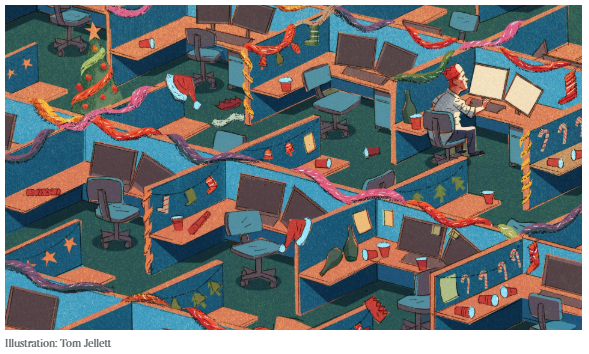
I have a friend who will be working over Christmas. It is his choice. Along with reclusive drunken nights, it is his way of drowning the lonely anguish of a solo Christmas. Since his divorce, he works right through the festive season, avoiding family for fear of their sympathy. His boss allows it, but it saddens me to imagine his workstation, a solitary light in an otherwise barren office.
There will be many like him.
If you are chronically lonely, it affects not just emotional wellbeing, but can seriously damage your physical health. Loneliness is more synonymous with old age, but can hit at any age.
Recently, a 27-year-old patient of mine told me about his month since our last appointment.
He’d had some obligatory nods with colleagues, cursory dialogue when ordering lunch and buying groceries. But he had not had any meaningful interactions since last month’s therapy session. Nothing to offer respite from the ache of loneliness.
He describes it as a physical malaise. “It’s like a crushing feeling in my gut.”
He feels ashamed about being lonely. It began after his girlfriend left him three years ago. Family and friends offer support, he has plenty of names in his phone. He’s on social media, but is not sure if the technology is helpful or a curse.
He’s right. Research indicates social media’s reduced auditory and visual cues online make it less rewarding than face-to-face encounters. We are more wired in than ever, but data shows that face-to-face social networks are smaller. Maybe we’re busier looking at our phones than each other?
Loneliness is more than being physically alone. “Loneliness is a distressing mental state where an individual feels estranged from or rejected by peers and is starved for the emotional intimacy found in relationships and mutual activity,” says psychologist Robert Weiss’s well-known definition.
Experts estimate that about one-third of Australians are lonely at one time in their lives. The affliction is more likely to affect the elderly, men, single parents and those living alone.
Some common causes are: mental illness, disability, divorce, being a carer, immigration and discrimination.
Loneliness carries a stigma, often evoking pity or disdain in others. But mostly we are unaware of the serious health risk. The loneliness ache actually means something, that we need to make an adjustment, because as a “pack animal” humans are neurobiologically made to be with others.
For socially isolated individuals, the risk of death doubles, a meta-analysis on social relationships and mortality risk by Brigham Young University in the US found. Reinforcing the results, the authors say mortality risk is on par with smoking, alcohol and obesity.
The compromised health can come in the form of high blood pressure, spikes in stress hormones like cortisol, chronic inflammation, or weaker immune resistance and cardiovascular functioning.
This is why a good GP will assess a patient’s social functioning.
John Cacioppo, a professor at the University of Chicago, is a heavyweight in loneliness research.
He warns that loneliness seems to impair self-regulation more with age, increasing the risk of unhealthy behaviours. Younger people are better at absorbing stress, and loneliness creates medical wear and tear over the years.
Restorative behaviours such as sleep are important for all. But lonely people are prone to micro awakenings during sleep, further compromising their health, says Cacioppo. It is likely the fear receptors in the brain are too alert, a form of evolutionary hard wiring that is heightened when we are alone.
Another patient of mine suffers loneliness mostly at night. He keeps the talkback radio going while he falls asleep. “I know it’s silly, but the voices comfort me,” he says. Yet they probably stop him from sleeping deeper or feeling rested in the morning.
Of course we’ve all felt transient loneliness. But we did something about it, like call a friend. Almost snapping ourselves out of it.
So when you hear of someone’s loneliness it’s easy to suggest common sense antidotes. But these don’t easily apply to those with chronic loneliness. The isolation over time makes them hypervigilant about people and rejection. Their stand-offishness becomes self-fulfilling.
Cacioppo’s studies have proved this, showing more pronounced electrical activity in the brains of lonely individuals around negative social cues. lonely people’s brains are too aware of potential social threats, Cacioppo says. The chronically lonely are often defensive around well-intended suggestions to socialise. The avoidance has become so automatic, reinforced by self-talk that justifies why clubs, volunteering, or birthday parties are a bad idea.
Extreme loneliness can lead to anxiety, depression, and substance abuse, and social isolation is a key risk factor for men who attempt suicide, the Black Dog Institute says.
The Australian Bureau of Statistics predicts a rapid increase in people living alone over the coming 20 years. This will likely increase loneliness.
Solutions are needed, but experts don’t think this is simply a matter of turning to social media. It’s more about the quality than the quantity of relationships.
What helps is engaging with others through a common interest, or something community-based. But importantly, managing the fear of rejection through restructuring thinking patterns, and learning to relax any performance anxiety.
Online interactions can help, but physically connecting is healthier. It increases the release of oxytocin, a feel-good hormone. Getting closer to family is worth a try — forgive them if needed. Or how about connecting with your neighbour, or possibly rekindling an old friendship?
Meaningful relationships that make us feel connected help us build resiliency, survive hardships, and improve physical and mental health.
Humans are more similar than dissimilar. So irrespective of any differences, we need to keep an open mentality. None of us are so unique that it is impossible to find a similarly minded person somewhere.
Dr Dennis Mazalin is a Melbourne clinical psychologist.